
In Greece, food has never been just about feeding the body — it has always been about meaning, connection, and community. My own grandfather, who was a priest, taught me that to feed others is one of the greatest blessings. That ethos stretches back thousands of years, to the rituals of ancient Greece, when food was offered not only at the family table but also to the gods, the community, and the wider world.
The ancients understood that food connected the human and the divine. Sacrificial offerings of bread, oil, wine, and honey were part of daily worship, marking gratitude and respect. Seasonal festivals — like the Thesmophoria, where women baked ritual cakes in honour of Demeter — remind us that food has long been a way to celebrate life’s cycles and transitions.
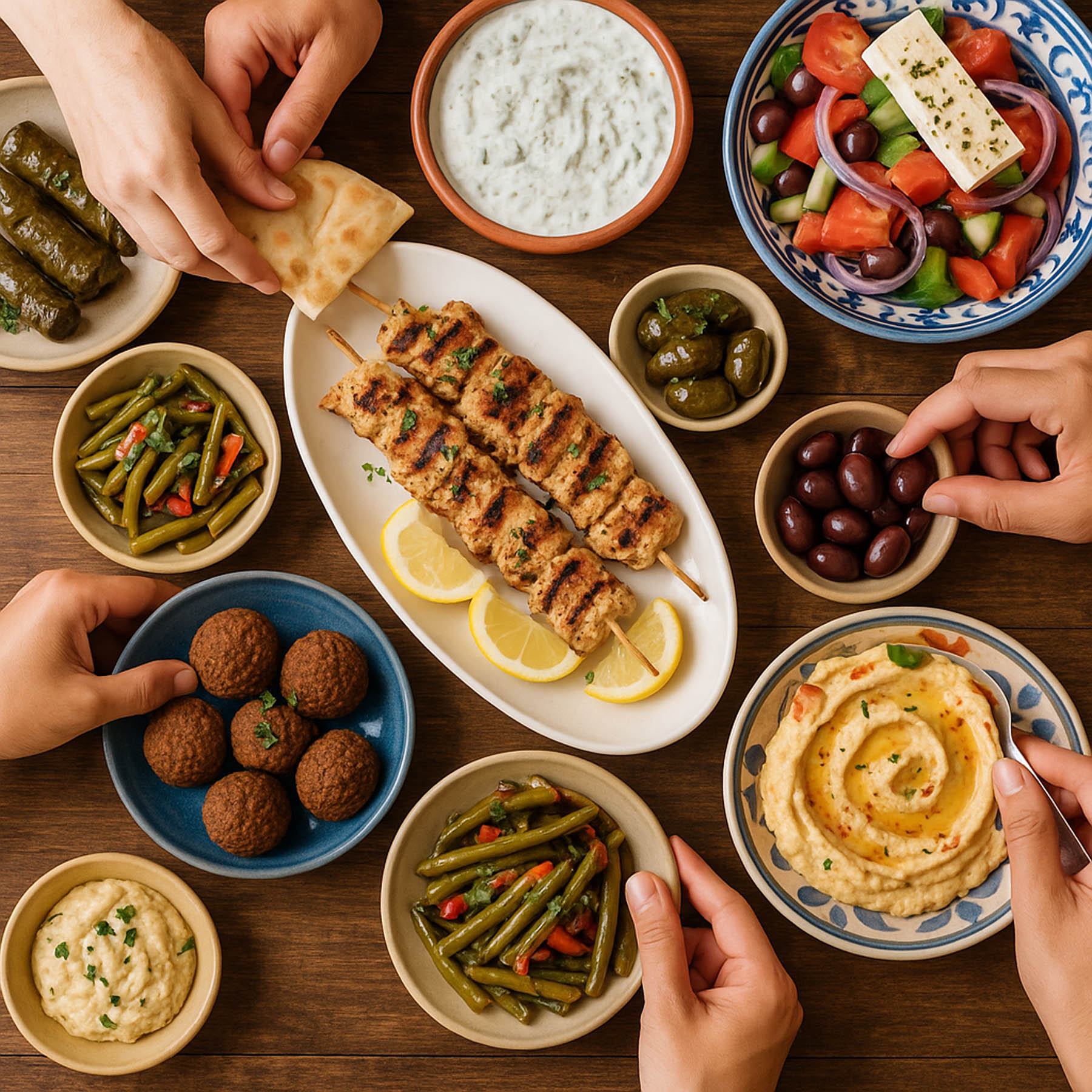
Fast forward to today, and we still see echoes of these rituals in modern Greek life. Breaking bread together remains the foundation of hospitality. Seasonal feasts — Easter lamb roasted on the spit, autumn grape harvest celebrations, Christmas honey-dipped melomakarona — continue to mark the year. Even something as simple as sharing a mezze table is a ritual of belonging, where conversation flows as freely as the olive oil.
Foraging, too, remains an important ritual. In Crete, I grew up seeing women gather snails or horta (wild greens) from the hillsides — a practice as ancient as the land itself. Today, I still believe there’s something sacred in walking the fields or forests, recognising nature’s gifts, and bringing them to the table. It connects us both to our ancestors and to the natural cycles that sustain us.
Another way traditions are kept alive — and new ones formed — is through cooking with children. I remember watching my mother and grandmother bake, and I joined them from a young age. It wasn’t just about learning recipes, but about absorbing values: patience, creativity, and the joy of feeding others. When I cook with my step-grandchildren or encourage guests to bring their little ones into the kitchen, I see the same spark. These moments become the rituals that live on, carried forward by the next generation.
I’ve also witnessed how powerful food rituals can be in the retreats I host. When guests cook, taste, and share together, something deeper than just eating happens. People relax, open up, and form bonds that last long beyond Crete or Marrakech. Food rituals, whether ancient or modern, have this extraordinary ability to dissolve barriers and remind us that we are part of something bigger — a family, a community, a culture, a story.
And rituals don’t need to be grand. They can be woven into daily life. A drizzle of good honey on yoghurt every morning. Lighting a candle before sharing a meal. Cooking with seasonal ingredients as a way to honour nature’s rhythm. A walk to gather herbs or mushrooms. These small acts transform food into something more — not just sustenance, but nourishment of spirit.
How to Create Your Own Modern Food Rituals
If you’re inspired to weave more meaning into your meals, here are a few simple ways to begin:
Forage with intention: Take a walk in your local area to collect seasonal herbs, fruits, or greens — even nettles or blackberries. Preparing a dish from what you’ve gathered brings nature into your kitchen.
Cook with children: Invite little ones to stir, shape, or taste. It’s not just teaching them recipes — it’s giving them memories and a sense of belonging.
Mark the seasons: Celebrate the arrival of spring with fresh herbs, summer with tomatoes, autumn with roasted squash, and winter with citrus. Cooking seasonally connects you to the rhythm of the earth.
Create a weekly ritual: A Sunday meal, a Friday night mezze, or a monthly baking day — consistency turns moments into rituals.
Share with others: Cook a dish to take to a neighbour, host a small dinner, or bring olive oil or honey to a friend instead of wine. Food shared is food elevated.
Food rituals don’t need to be complicated. They are simply about choosing to pause, gather, and give meaning to the way we cook and eat. As the ancients knew, and as I continue to see every day, food is always more than food.