

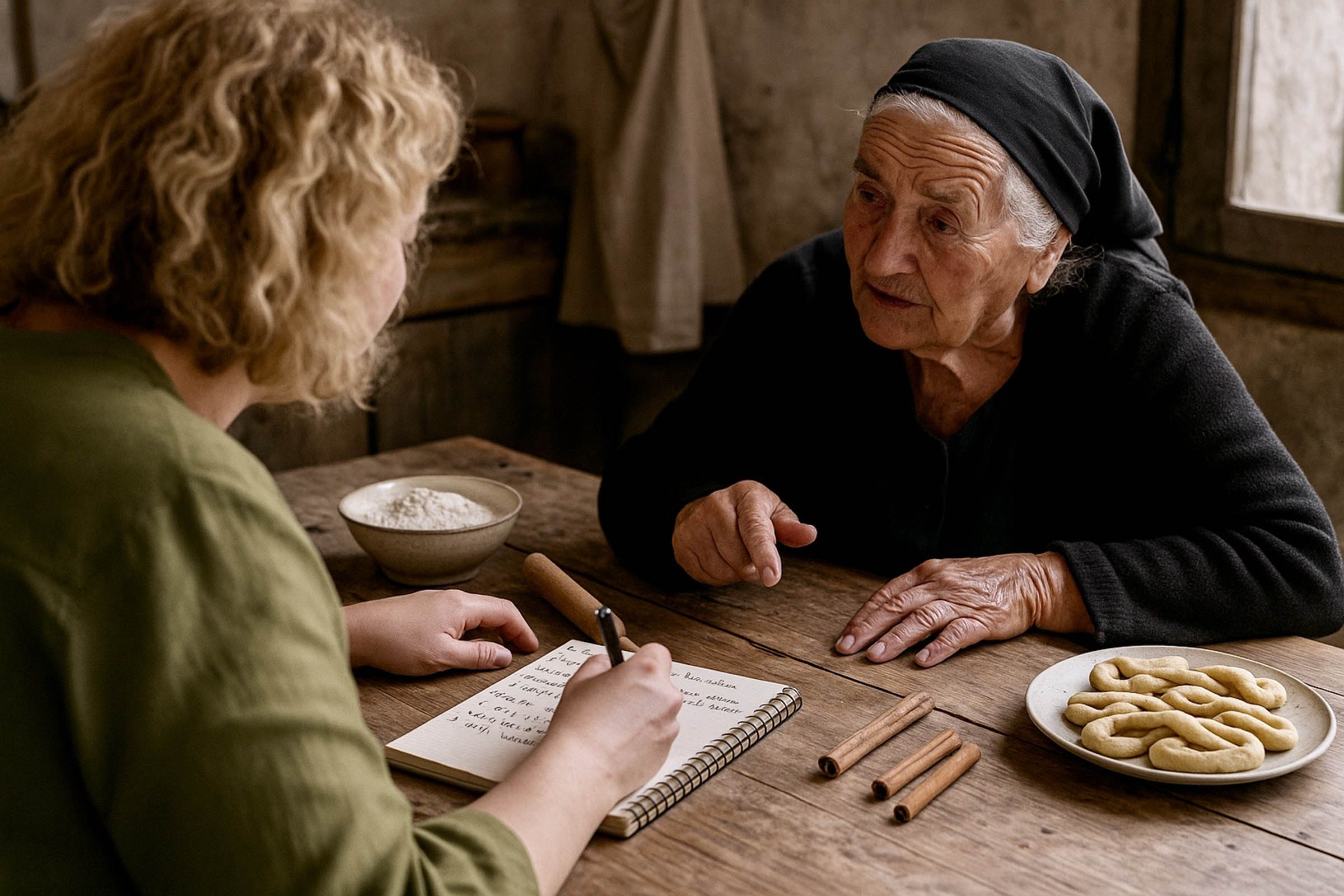
Whenever I pack for a trip, there’s one item I never forget: a small, empty notebook. I call it my recipe notebook, but really it’s much more than that. For me, travel has always been about discovery — not just of landscapes and monuments, but of flavours, smells, and the way people use food to tell their stories. The notebook is where I capture those fleeting discoveries before they slip away.
It often begins in the most ordinary of places. In Crete, I’ve scribbled notes while watching a grandmother roll pastry thinner than tissue paper. In Morocco, a market vendor once leaned across baskets of herbs to tell me the secret of adding orange blossom water to a simple salad. In South Africa, I was shown how to prepare a braai that is so much more than cooking meat over flames — it’s a ritual of gathering. In the Caribbean, I filled pages with vibrant flavours of jerk seasoning, mango, and rum-soaked cakes, each dish carrying centuries of history and resilience.
These scribbles have a life beyond my notebook. They’ve shaped menus I’ve created, retreats I’ve hosted, and stories I’ve told. In fact, when I was asked to design a menu celebrating the Commonwealth for a members’ club in Mayfair, I didn’t turn to cookbooks — I turned to my travel notes. Dishes from New Zealand, Australia, and the Caribbean that I had collected on my journeys became the backbone of a menu that I designed in celebration of the Commonwealth for a private members club in London.
The recipes I jot down are not always written like recipes. Sometimes they’re just sketches of ingredients, a note about a spice I tasted for the first time, or a quick drawing of a cooking vessel I’d never seen before. Later, when I’m back home, I return to these pages and recreate the dishes in my own kitchen. Sometimes they work exactly as they were shown to me; sometimes they evolve into something new, shaped by memory, instinct, and the ingredients I have at hand.
What fills me with joy is how the notebook becomes a kind of living diary. Each page holds not only the flavour of a dish but also the memory of a place and the people who shared it with me. Reading back, I can smell the herbs of the Cretan countryside, feel the heat of a tagine bubbling in Marrakech, or recall laughing with hotel about the crocodile on the buffet table in Zambia.
Why do I carry an empty notebook? Because travel, to me, is about openness — leaving space for the unexpected, for lessons I didn’t know I was going to learn. And why do I always fill it? Because food is the universal language of connection, and I never want to miss a word of it.
And next March, when I travel to Japan, I can’t wait to meet the people who will share their culinary secrets with me — from the quiet rituals of tea to the artistry of sushi. I know already that those pages will be precious, waiting to be filled with stories and tastes I have not yet imagined.
So if you travel, I’d encourage you to carry your own empty notebook. Leave a little space in your suitcase for discovery. Write down the dishes that move you, the ingredients you’ve never seen before, and the tips generously shared by strangers who soon feel like friends. In time, you’ll find that what you bring home is far richer than souvenirs — it’s a record of connection, flavour, and memory that will feed you for years to come.