

I go into these stories at length in my book Under the Olive Tree, but for those who are meeting me for the first time, let me share this: I was a blessed child. We didn’t have electricity, hot water, or any of the conveniences we now take for granted. But what we did have was food of the very best kind — grown under the Cretan sun, reared from our own animals, or foraged from the land around us.
Honey was our sweetener, wheat our flour, olive oil our gold. Fruit and nuts were plentiful, and my grandmothers and mother made our cheese and yogurt, so our dairy was always fresh and full of flavour. We never ate shop-bought sweets or cakes — there weren’t shops in our tiny village, and even if there had been, we had no money to buy them. But what we did have was imagination in the kitchen, and the ability to make something wonderful from almost nothing.
One of my favourite treats as a child came from my paternal grandmother’s simple hearth. In their one-room house, tobacco leaves hung to dry at one end, while a big fireplace filled the other. I would crouch near the flames, feeding in bits of vine wood, while she fried thick, delicious chips just for me. Later, my grandfather, papou Tzortzoglou, would take that same fire and make what felt like magic: slowly toasting plain flour until it smelled nutty, adding sugar and cinnamon, then shaping spoonfuls into little madeleines for us. Even now, I marvel at that kind of creativity — long before chefs spoke of “molecular gastronomy,” my grandparents were creating miracles out of flour, fire, and love.
My mother, too, had her own ways of conjuring sweetness. She would roll out dough to thin filo, cut it into strips, and fry some pieces in olive oil for aroma, then boil the rest in water. Just before serving, she combined the two, drizzled with honey, and finished with cinnamon. It was humble food — but to me, it tasted like abundance.
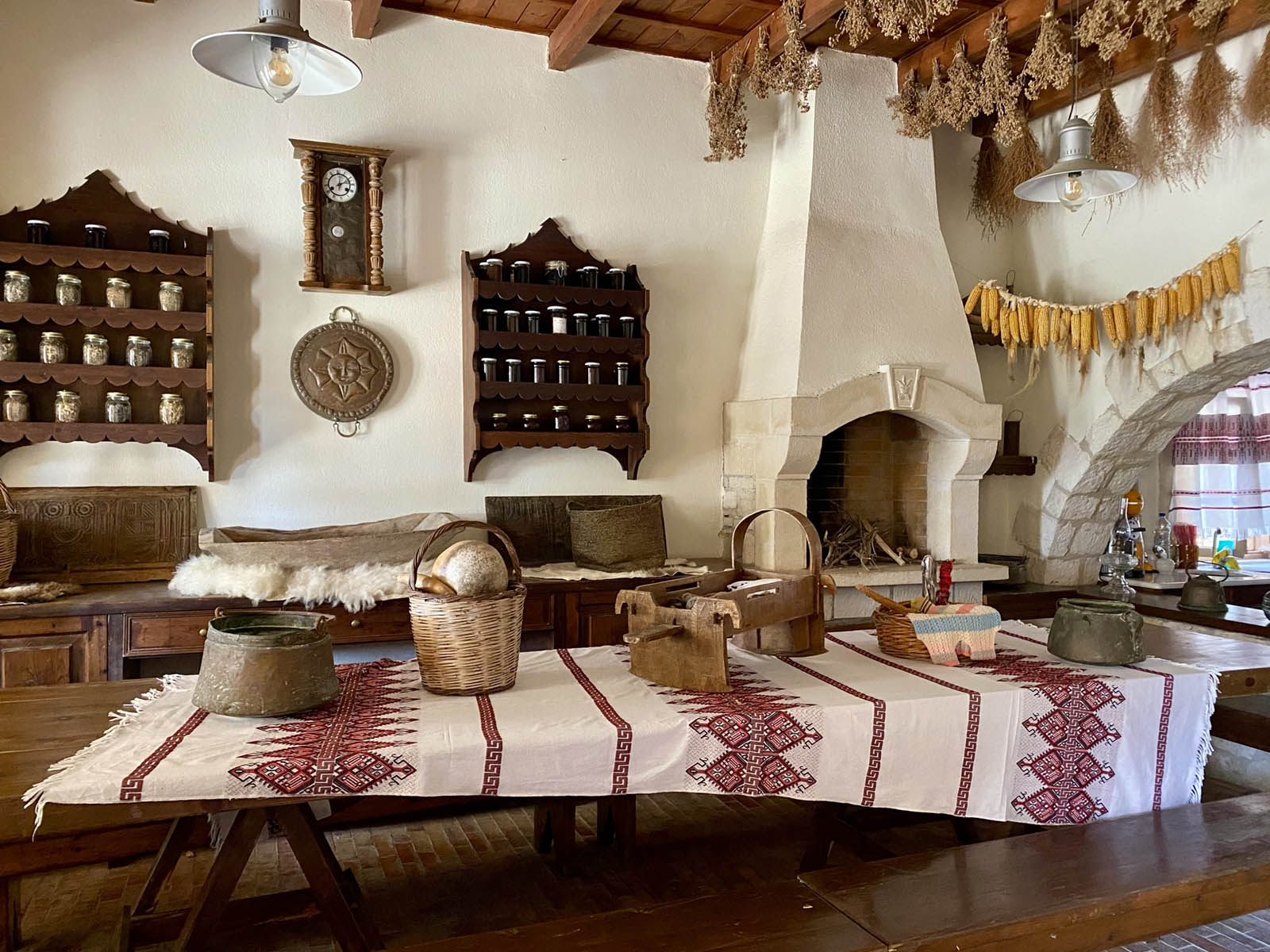
Still, most of my childhood was spent in my maternal grandmother’s kitchen. Yiayia Irini cooked constantly, feeding not just her family of nine children, but also workers who lived with us during the harvests. Her long wooden table — the kind I only later saw in English manor houses — was always set with two or three dishes, cooked in generous quantities to sustain those who spent their days in the fields. Whatever was left over became breakfast: fried liver, chicken casseroles, meat pies — dishes I thought strange for the morning, but which made perfect sense to bodies that needed fuel for another day of labour.
I loved nothing more than hovering around her skirts, stirring a pot, kneading mountains of dough, stuffing sausages, or simply adding wood to the fire. She baked bread for the week, but also the prosphoro (“the body of Christ”) for my grandfather to take to church every Sunday. On feast days, there was artos, a sweet bread handed out after the service. On memorials, there was kolyva — a dish of boiled wheat with nuts, raisins, pomegranate, and spices. People would leave the church happy, with something substantial in their stomachs, a gift of both faith and food.
I loved kolyva so much that I reimagined it in my book as a breakfast dish — “Varvara” — served not dry but in the starchy liquid from the wheat, perfumed with cinnamon, cloves, and sesame. It is one of the clearest examples, for me, of how the food of my childhood continues to live on, nourishing not only my memory but also my table today.
When I think of my Cretan kitchen memories, I think of more than food. I think of nurture, imagination, and survival wrapped in generosity. These kitchens shaped me, and I carry them into every retreat, every demo, every recipe I share. They remind me daily that food is never just sustenance — it is heritage, memory, and love passed from one hand to another.
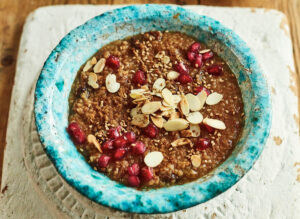 Recipe from My Childhood: Varvara (Sweet Wheat Porridge)
From my book Under the Olive Tree: Recipes from my Greek Kitchen
This dish is inspired by kolyvozoumo, the sweet wheat pudding my mother made, which she thickened with dry roasted chickpea flour. For a lighter version, I use corn flour. Toasting the cracked wheat before adding water, and finishing with roasted sesame and nuts, makes it as aromatic and nutty as my mum’s ever was.
Serves 4
- 150g cracked wheat
- 750ml water
- 75g sultanas
- 25g raisins
- 35g caster sugar
- 3 tbsp (15g) corn flour
- 50g walnuts, roasted
- 30g almond flakes, roasted
- 30g sesame seeds, roasted
- A few pomegranate kernels
- A few fresh mint leaves, finely chopped
- ½ tsp ground cinnamon
- ¼ tsp ground cloves
- A drizzle of honey and more cinnamon to serve
Instructions
- Preheat the oven to 200C/400F/Gas 6.
- Toast the sesame seeds in a dry frying pan over medium heat until golden and aromatic, stirring often so they don’t burn. Remove to a plate. Once cool, whiz half of them in a blender to release their aroma, keeping the rest to scatter when serving.
- Roast the walnuts on a baking tray for 5 minutes. Once cool, break into smaller pieces.
Place the cracked wheat in a dry saucepan and toast over medium heat until golden and nutty. Carefully add the water (it may splash), then stir in the sugar and sultanas. Cook until the wheat has absorbed three-quarters of the water and is tender. - In a cup, mix the corn flour with 3–4 tbsp cold water to form a slurry. Add to the wheat and stir for 2 minutes until thickened.
- Stir in the crushed sesame, cinnamon, and cloves. Remove from the heat and divide into four bowls.
- Top with roasted walnuts, remaining sesame seeds, cinnamon, pomegranate kernels, mint, and a drizzle of honey.