
One of the most powerful lessons I carry from my Cretan upbringing — and from travelling throughout the Mediterranean — is that food tastes best when it follows the seasons. Not only does it make sense environmentally and economically, but it also nourishes us in tune with what our bodies naturally crave at different times of the year.
In Crete, and indeed across the Mediterranean, the rhythm of the table is set by the land and the sea. Spring means fresh herbs, tender wild greens, young peas, and broad beans — often foraged rather than bought. Summer overflows with tomatoes, cucumbers, aubergines, peppers, melons, and figs. Autumn brings grapes, pomegranates, olives, and chestnuts, while winter makes us appreciate warming stews, citrus fruit, pulses, and preserved ingredients like sundried tomatoes and pickled vegetables.
Seasonal eating here is not a trend; it is a way of life. Villagers know which greens appear after the first rains, which fish are at their best in certain months, and how to preserve summer’s abundance to see them through the colder months. My mother and grandmother were masters of this — nothing wasted, everything used at the right time.
It is also about balance and joy. Imagine a July table in Crete: a bowl of dakos topped with sun-ripened tomatoes and mizithra cheese, fried courgette blossoms stuffed with herbs, a plate of watermelon chilled in the fridge, and maybe a grilled sardine or two. Light, refreshing, and exactly what the body needs in the heat. Contrast that with a December table: a slow-braised lamb stew with artichokes, lentil soup with a squeeze of lemon, and a dish of preserved quince for dessert. Comforting, warming, and grounding.
For me, seasonal eating also encourages creativity. When you embrace what is abundant, you find new ways of using it — aubergines become dips, baked dishes, or fillings for pies; oranges brighten savoury sauces as much as desserts. And when you return to the same ingredients year after year, they become part of your story — the tastes that connect generations.
Seasonal Eating in Cumbria
Although I live far from Crete now, in Cumbria I’ve discovered that the Mediterranean philosophy of eating seasonally translates beautifully. Nature provides her own cues — you just need to tune in.
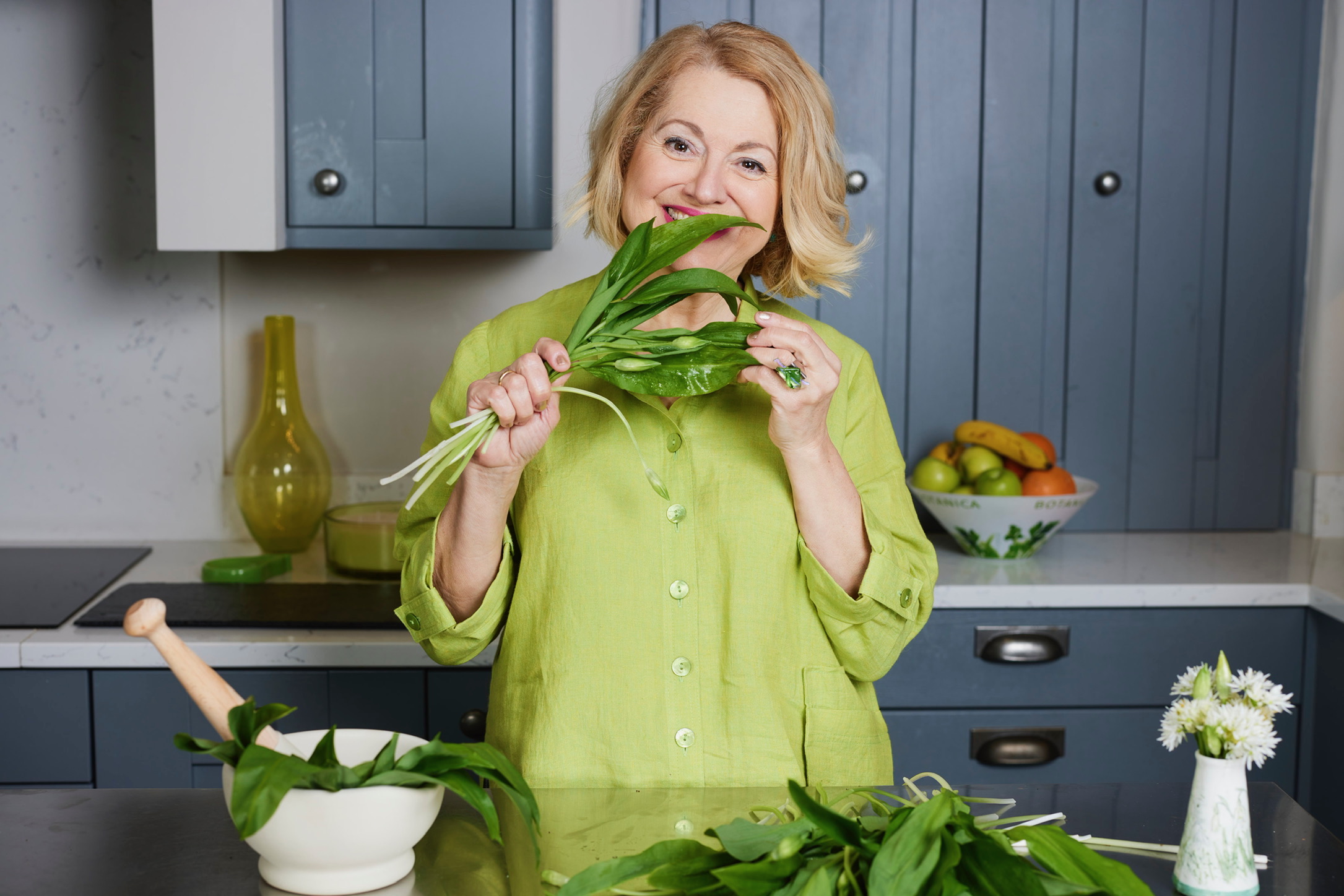
- Spring in Cumbria brings wild garlic in the woods, young nettles for soups, and the first morels and St George’s mushrooms for those who know where to look. On the coast, cockles and mussels can be gathered, while rhubarb appears in gardens and on market stalls.
- Summer offers samphire along the estuaries, strawberries and gooseberries in the hedgerows, and the joy of long evenings with fresh local lamb or line-caught sea bass grilled simply with lemon.
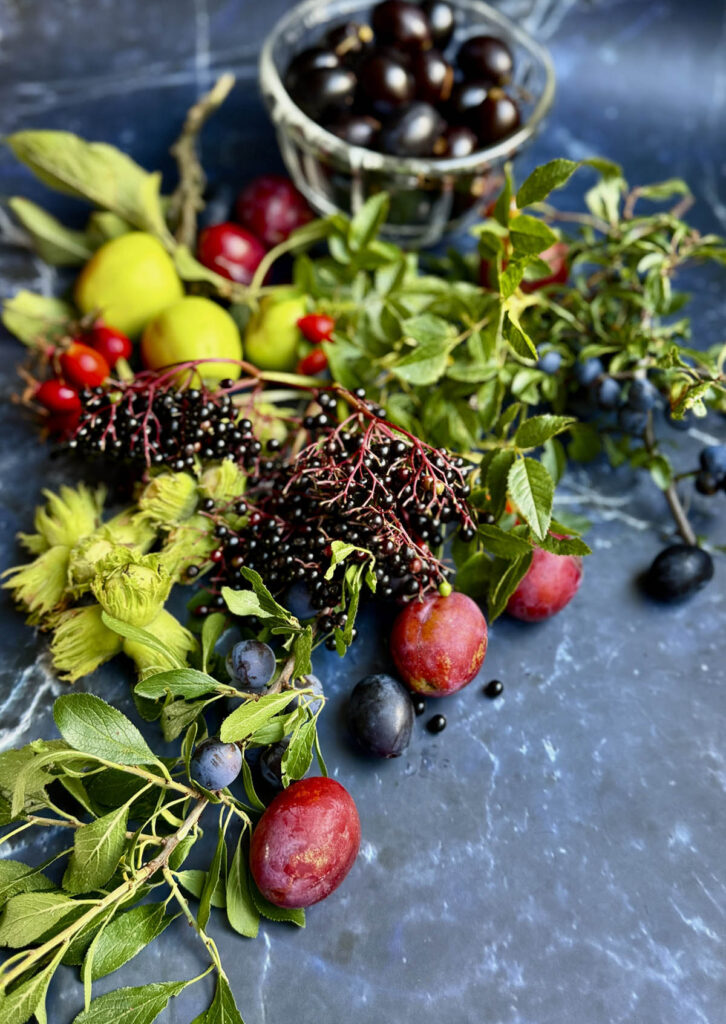
- Autumn is the time for hedgerow foraging: blackberries, elderberries, sloes, and hazelnuts. It’s also mushroom season — chanterelles, ceps, and hedgehog fungi for those who forage carefully. Apples and damsons come into their own, and farmers’ markets fill with squashes and root vegetables.
- Winter is quieter but no less rewarding: hearty brassicas like kale and Savoy cabbage, preserved damson jams and chutneys, and comforting local game such as venison or pheasant, all pairing beautifully with robust stews.
Foraging is part of the joy here. Just as in Crete people head to the hills to gather wild horta, in Cumbria I can fill a basket with blackberries or collect samphire at the coast. Cooking with what is around me brings me closer to place — the same principle my grandparents followed, but in a different landscape.
Lessons from the Mediterranean Table (and Cumbria’s Hedgerows)
- Shop or forage with the season, not against it.
- Celebrate humble ingredients like pulses, greens, and fruit — they are the backbone of the diet.
- Use olive oil, herbs, and citrus to elevate simple dishes.
- Preserve abundance (by drying, pickling, bottling, or freezing) so that seasonal joy lasts longer.
- Let the seasons guide your gatherings: a tomato salad in January has little soul — but in July, it’s a feast.
Seasonal eating is not about restriction, but about alignment. It brings flavour, health, and connection to the land. That is the true Mediterranean lesson: to savour what nature offers, when it offers it — whether it’s figs in Crete, samphire on the Cumbrian coast, or a basket of blackberries from the hedgerow.
How to Start Eating Seasonally
- Shop local first. Farmers’ markets, veg boxes, and small grocers often sell what’s fresh and in season rather than what’s travelled thousands of miles.
- Use your senses. Seasonal produce looks vibrant, smells fragrant, and tastes better — tomatoes should smell of sunshine, apples should snap with crispness.
- Cook simply. When produce is at its peak, it doesn’t need much. A drizzle of olive oil, a squeeze of lemon, or a sprinkle of sea salt often does the trick.
- Preserve the abundance. Freeze wild garlic pesto, bottle damson jam, or dry wild mushrooms to savour the season long after it’s passed.
- Learn the calendar. Keep a seasonal food chart on your fridge, or note what’s appearing in markets each month. Soon you’ll be able to anticipate your favourites.
- Forage mindfully. Take only what you need, leave plenty behind, and always be certain of identification before eating wild plants or fungi.
Eating seasonally doesn’t have to be complicated — it’s about noticing what nature is offering right now, and celebrating it at the table.