
A guide to building flavourful, textural and visually beautiful dishes at home
Introduction
You don’t need complicated techniques or elaborate ingredients to make food that feels special. What you do need is intention.
In this guide, I’ll show you how to bring together five essential elements that turn simple dishes into complete, satisfying experiences:
- Flavour depth
- Textural contrast
- Visual appeal
- Seasonal balance
- A touch of you
We’ll explore how these elements can work in harmony, and I’ll share real examples from my kitchen to inspire you to try your own. These are not rules, but invitations — to cook with care, curiosity and joy.
Chapter 1: The Five Elements of a Balanced Plate
1. Flavour Depth
Great dishes usually strike more than one flavour note. Think beyond salty and sweet — aim to incorporate:
- Umami (aged cheese, mushrooms, tomato, soy, meat, or olives): Try my monkfish with avgotaraho and lemon-olive dressing, where rich fish is balanced by sea-salty depth and citrus brightness.
- Acidity (citrus, vinegar, yogurt, pickles): A quick pickle in the whipped citrus feta brings both contrast and freshness.
- Sweetness (fruit, honey, roasted vegetables): The quince in my pork tenderloin dish introduces warmth and gentle sweetness.
- Bitterness (radicchio, dark chocolate, herbs): Dark chocolate and espresso dust give a bitter edge to the brownie with lime.
- Salt (sea salt, anchovies, hard cheese): Even a sprinkle of good sea salt on roasted vegetables can make them sing.
2. Textural Contrast
Nothing falls flat like a one-texture dish. Try combining:
- Creamy (yogurt, mascarpone, purées): The butterbean and artichoke purée in my briam recipe brings silkiness.
- Crunchy (nuts, pastry, toasted seeds): The hazelnuts in the pork tenderloin dish offer a satisfying bite.
- Crisp (raw vegetables, filo): Raw asparagus slivers over warm vegetables add a fresh snap.
- Chewy (dried fruit, roasted meats): The dates in my vegan brownie add a rich chew against the soft bake.
3. Visual Appeal
Your eyes eat first. Contrast colour, play with height, and use restraint. Fresh herbs, edible flowers, or a drizzle of something glossy can elevate the look without crowding the plate.
Take the Olive Oil, Lemon and Pistachio Cake with Poached Apricots as an example. The pale, golden slice is dusted delicately with icing sugar, sitting beside glossy, jewel-like poached apricots and a creamy quenelle of Greek yogurt topped with vibrant crushed pistachios. The colours are soft but striking, the textures layered yet elegant, and the plating invites you in before you’ve had a taste.
4. Seasonal Balance
Use what’s in season. It’s more flavourful, sustainable, and affordable. For example, my Grilled Peaches with Thyme & Greek Yogurt is perfect in late summer, when stone fruit is abundant and at its sweetest. In contrast, the Blood Orange Jelly with Spiced Tapioca & Cashew Cream celebrates winter citrus at its peak, bringing brightness to colder months. Let nature guide your combinations and allow your dishes to reflect the rhythm of the seasons.
5. A Touch of You
Your roots, your preferences, your mood — they all belong on the plate. Whether it’s a twist on a family recipe or a new take on something traditional, don’t be afraid to make it your own. My Xynochontros soup (creamy fermented wheat soup) is are just that — a dish from Crete with a hint of personal flair.
Chapter 2: From My Website to Your Kitchen
Here are some examples from different recipe categories on irinicooks.com that illustrate how the elements come together beautifully:
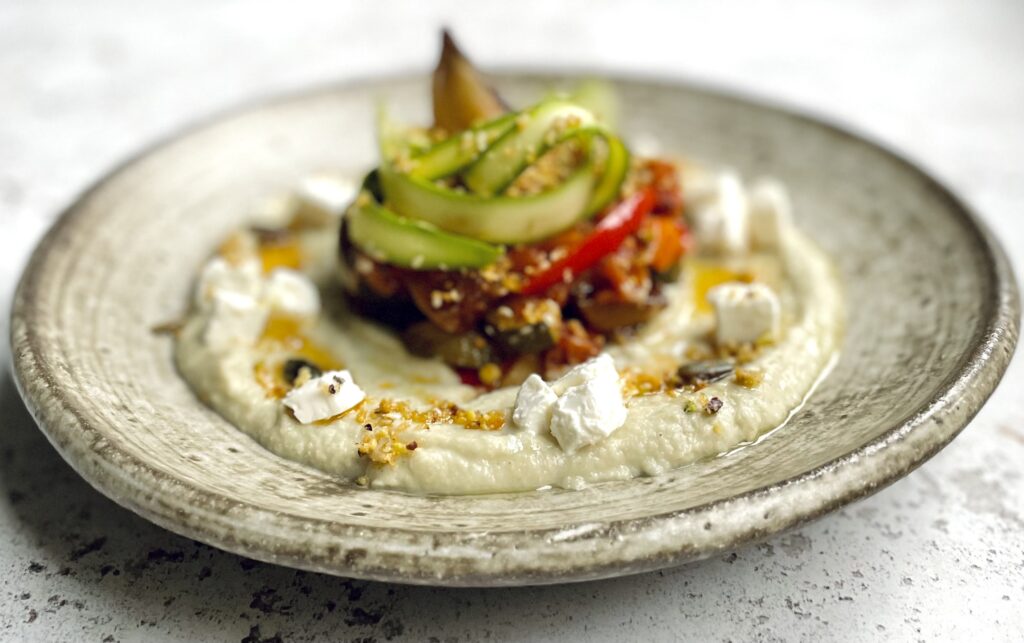
Vegetables: Plantbased Briam on a Butterbean & Artichoke Purée with Asparagus & Nut Crumb
- Texture: Tender roasted vegetables, smooth purée, crunchy nut crisp
- Flavour: Earthy root vegetables, tangy artichokebutterbean base, herbaceous uplift from raw asparagus and rosemary crumbs
- Visual: Jewellike roasted vegetables over a pale green purée, scattered bright crumbs and asparagus spears.
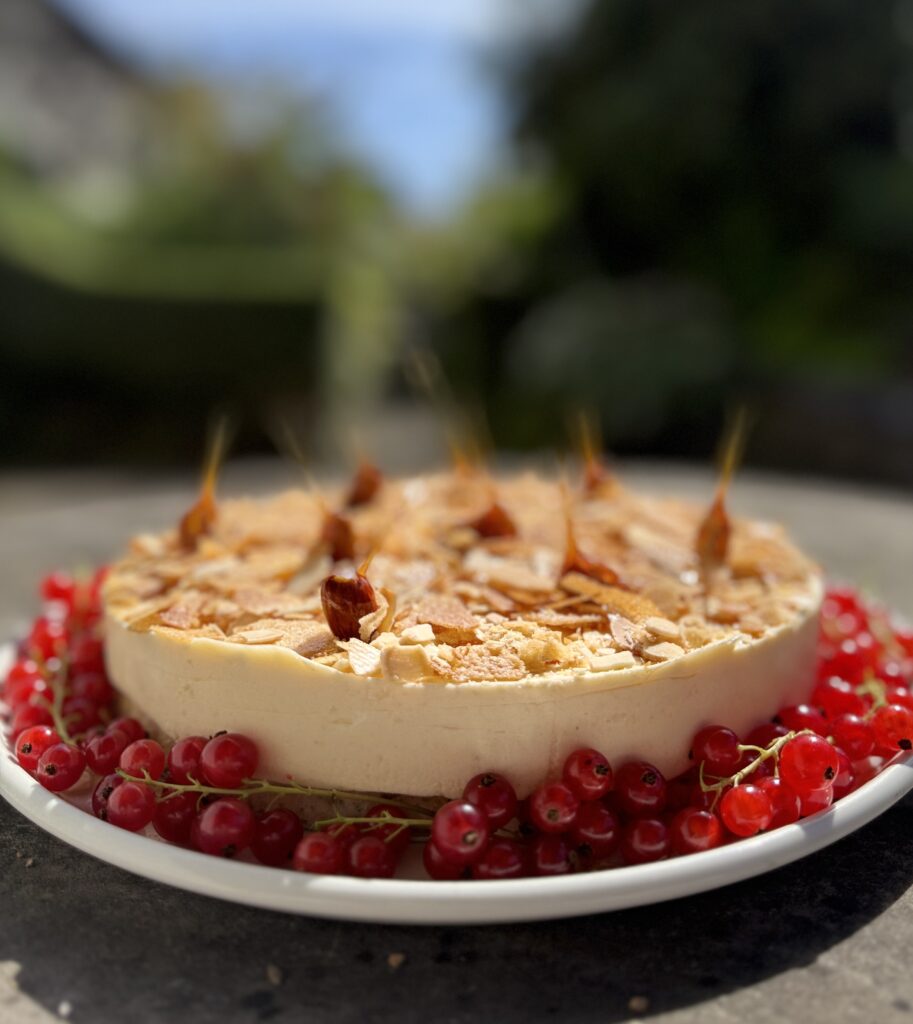
Bakes: Almond Bavarois Tart
- Texture: Silky almond set custard on top of a meringue type base.
- Flavour: Nutty almond richness, sweet caramelised topping and citrus brightness if added
- Visual: Glossy pale tart against the deep caramel colour of the topping garnished with pops of red in the red currants that surround it.
Fish/Seafood: Baked Cod with Potatoes, Onions & Tomato Sauce (Plaki)
- Texture: Flaky cod, soft potatoes, gently sautéed vegetables
- Flavour: Umamirich cod, mellow onions, sharp tomato and lemon
- Visual: Layered strata of fish, potatoes and sauce in rustic warm tones
Meat: Soutzoukakia from Smyrna
- Texture: Juicy aromatic meatballs, tender interior with crisping edges if baked or panfried
- Flavour: Savory spice blend, tomato sauce, subtle herb acidity
- Visual: Deepcoloured meatballs nestled in sauce with herb garnish Irini Tzortzoglou
Dessert: Vegan Date & Pistachio Brownie with Vin Santo, Coconut & Lime
- Texture: Fudgy brownie, crunchy nuts, chewy dried fruit
- Flavour: Natural sweetness, citrus brightness, wine depth
- Visual: Green pistachio flecks in brown, light sprinkling of coconut or lime zest
Chapter 3: Building Your Own Harmony Plate
Here are a few combinations to get you started:
- Cream + Crunch + Acid:
Yogurt + granola + stewed rhubarb. The yogurt soothes, the granola snaps, and the fruit cuts through. Burrata + toasted seeds + pickled beetroot. Rich dairy meets crunch and tang — ideal for a summer starter. - Earthy + Sweet + Bitter:
Roasted carrot + tahini + pomegranate molasses. The sweetness of carrot balances the nutty tahini and bitter molasses. Dark chocolate + orange + espresso dust. A dessert with depth, contrast and aroma. - Savoury + Fruity + Nutty:
Feta + watermelon + pistachio. A classic Greek trio that’s refreshing, briny and crunchy. Blue cheese + figs + walnuts. Robust cheese tamed by sweet fruit and toasted nuts.
Tips:
- Choose a base (grain, purée, dairy) — it anchors the dish.
- Add a highlight (fruit, cheese, cured meat) — it grabs attention.
- Include something fresh or pickled — it brightens.
- Finish with crunch and a final drizzle or dusting — it completes the story.
Chapter 4: Plating and Styling Made Simple
- Colour: Use a neutral base and 1–2 bold accent colours. Pale sauces make vibrant garnishes stand out.
- Height: Add layers or place elements slightly askew to avoid flatness. Stack or lean where you can.
- Garnish: A sprig of thyme, lemon zest, or crushed nuts can complete the look without overwhelming.
- Space: Let each element breathe on the plate — don’t overcrowd. A little negative space keeps it elegant.
Final Words
You don’t need more ingredients. You need to listen to them more closely.
Let this guide be a starting point for bringing balance and beauty into your everyday cooking. Use what you have, follow your taste, and enjoy the process.